


August 8, 2026
How to Choose the Perfect Moss Wall Art for Your Living Room (Size, Light and Style)
A practical guide to choosing the right moss wall art: sizing it to your wall, how it works with light, and which style fits your living room.
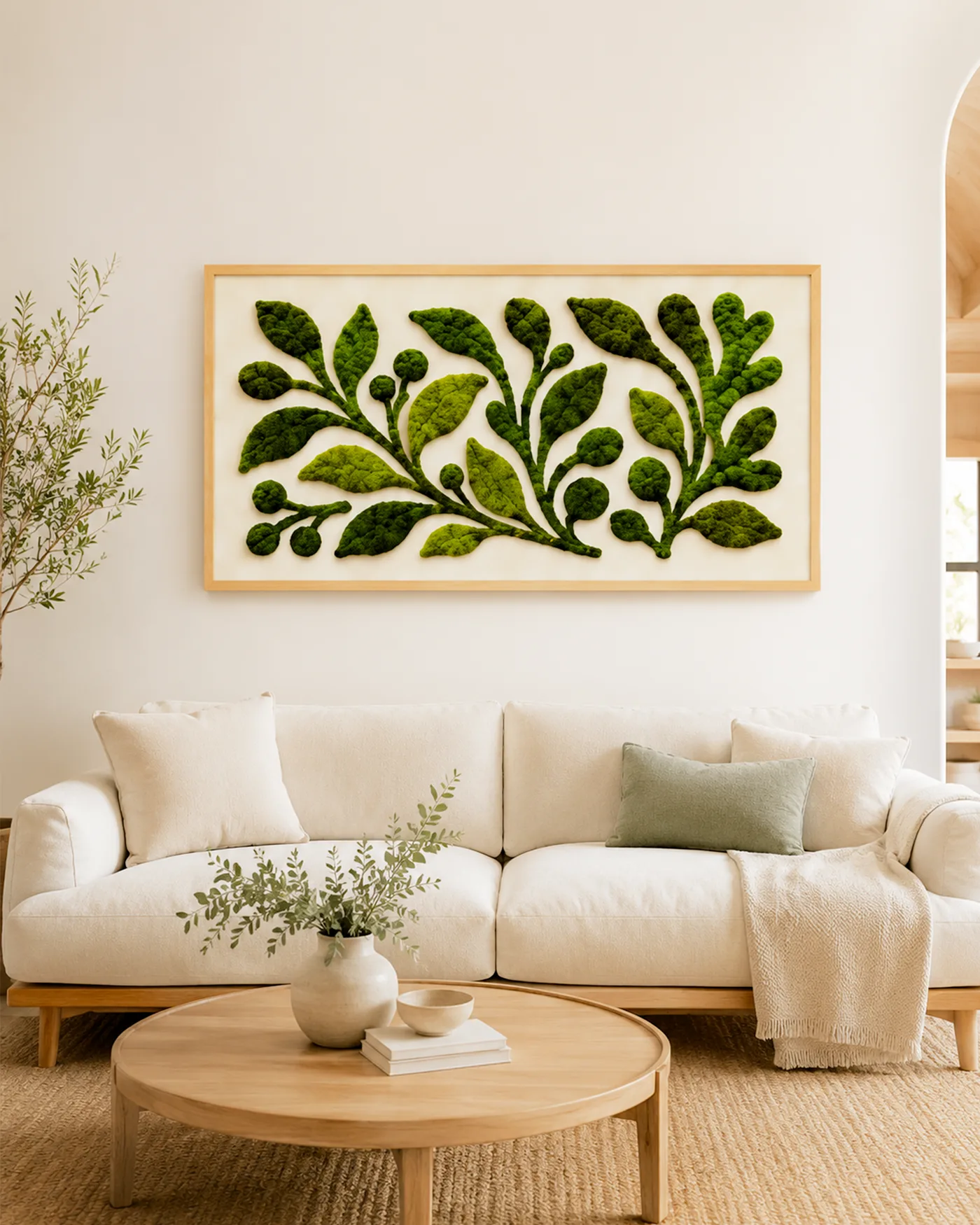
A moss wall art piece can be the one thing that gives a whole living room personality — but only if you choose it well. Hanging a moss piece isn’t like hanging a print: moss has texture, depth and a visual weight that no other decor element quite has. Before buying one, it’s worth thinking about three things: size, light and style.
Size: think about the wall, not the sofa
The most common mistake is choosing a piece based on the gap that’s “left over” on the wall, instead of thinking about the actual proportions of the space. A moss piece usually works best when it covers 60% to 75% of the width of the furniture below it (sofa, console, fireplace).
A few quick guidelines:
- Small living rooms or hallway walls: medium pieces, around 16–24 in, work well as a focal point without overwhelming the space.
- Large living rooms with high ceilings: this is where an XL piece above the sofa really earns its place; moss needs room to breathe.
- Walls with several elements already (shelves, frames, TV): one large piece usually works better than several small ones competing for attention.
If you’re torn between two sizes, go bigger almost every time. Stabilized moss has a visual density that shrinks in photos and grows once it’s actually on the wall.
Light: it doesn’t need sun, but it does play with the light you have
Here’s one of the real advantages of working with stabilized moss: it doesn’t need light to “live,” because it’s not alive in the botanical sense. You don’t have to place it near a window or worry about it drying out. You could hang it in the darkest hallway in the house and it will look just as good five years from now.
That said, light does matter for how it looks, not for whether it survives:
- Indirect natural light brings out the different greens and moss types (reindeer, cushion, sheet), giving the piece more depth.
- Warm artificial light (2700K bulbs, common in living rooms) tends to make the moss look richer and cozier.
- Cool or very direct light flattens some of the nuance, though the color itself won’t fade or change over time.
It’s not a technical limitation, it’s purely aesthetic: choose the spot based on how you want the piece to look, not on whether it can “handle” the light.
Style: make sure it speaks the same language as your room
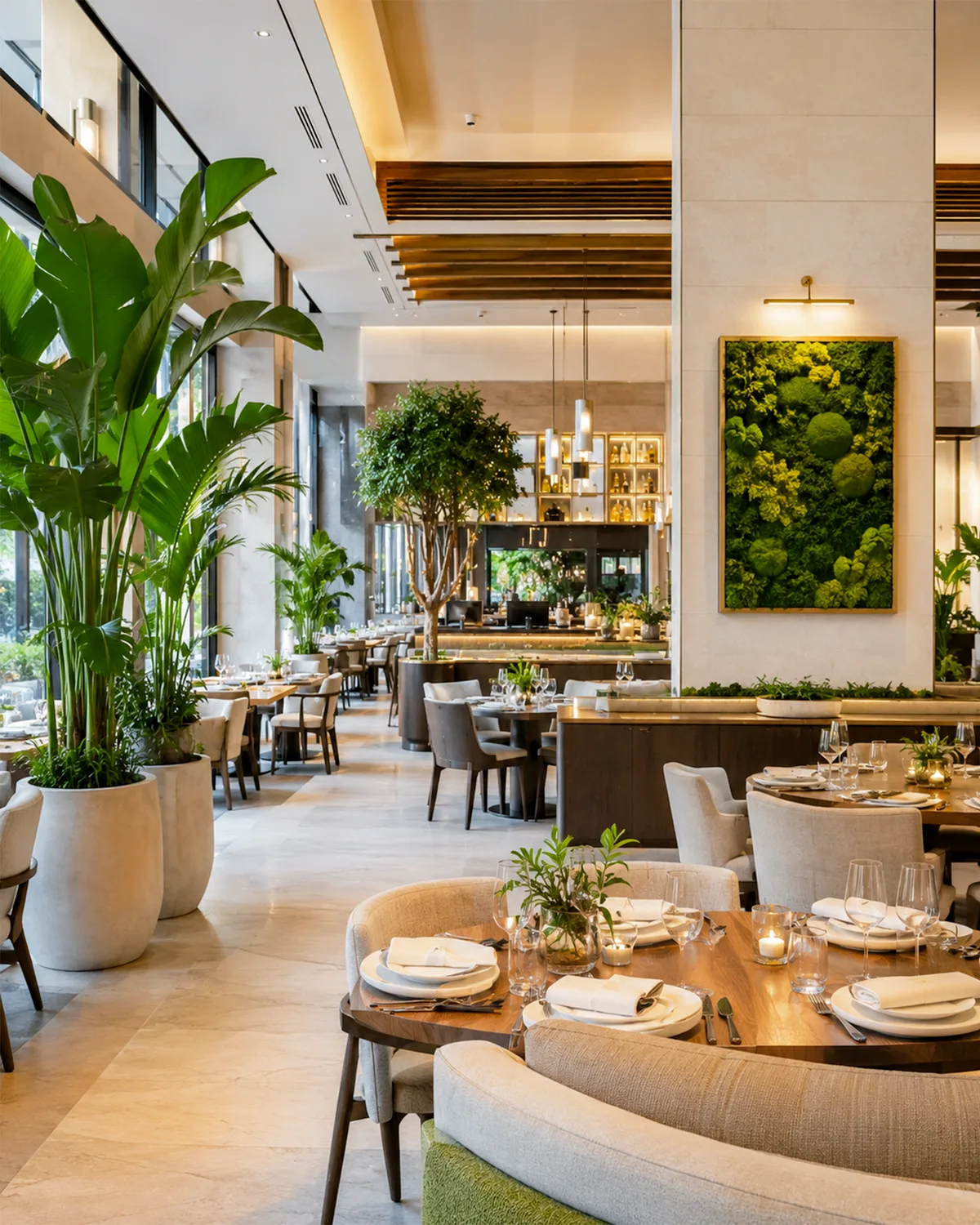
Moss is an organic material, so it naturally fits spaces that already have wood, linen, ceramics or stone. But it also works beautifully as contrast in more minimal, clean-lined living rooms, precisely because it adds the texture that’s missing.
A few combinations that tend to work:
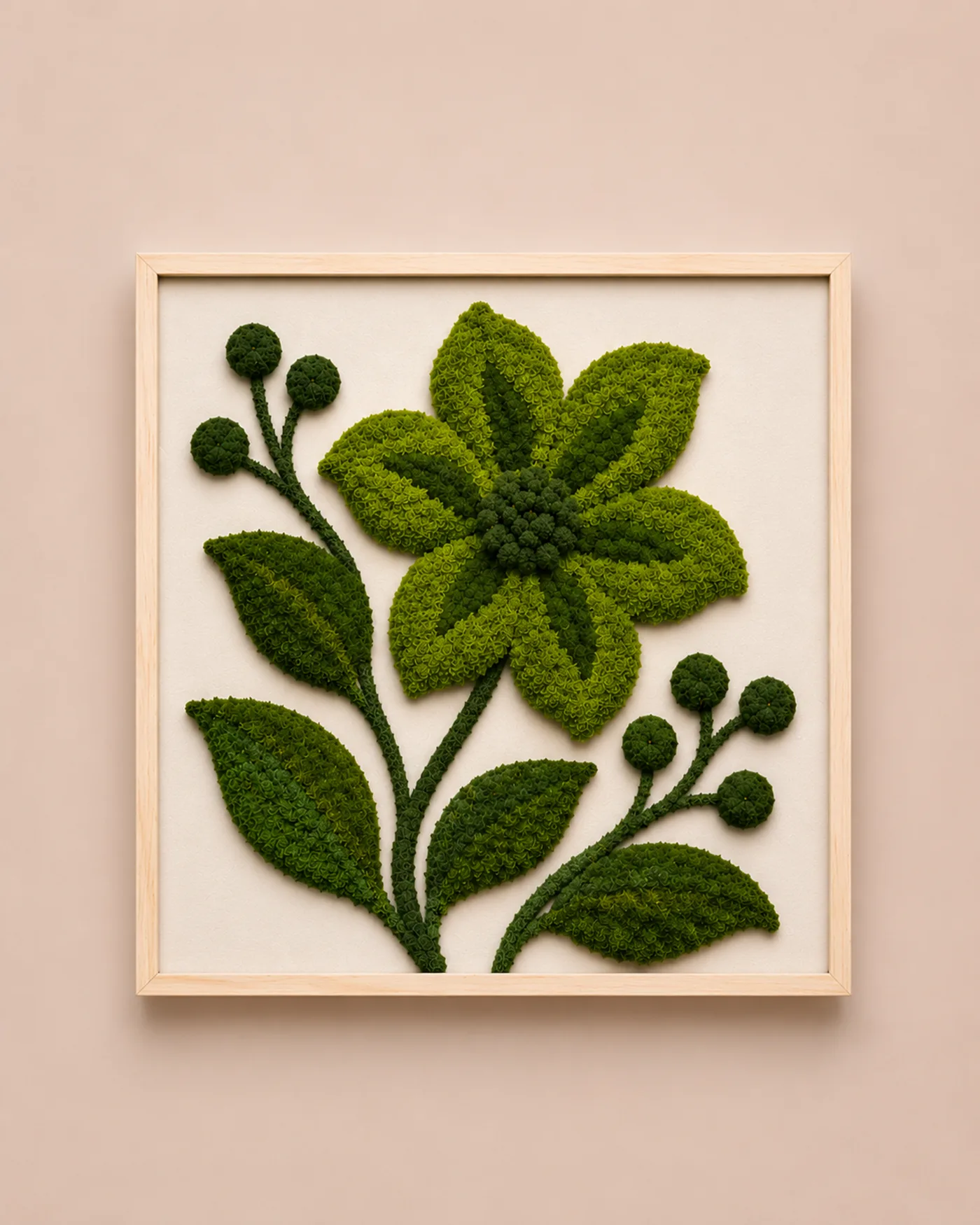
- Nordic or wabi-sabi living rooms: thin light-wood frame, moss in olive and forest tones.
- Industrial living rooms: black or metal frame, deeper, denser greens.
- Mediterranean or boho living rooms: wider frames, a mix of mosses and lichens with visible texture.
If your living room already has a fair amount going on, a single-tone moss piece with a clean composition — like our minimal line pieces — adds without overwhelming. If the space is very neutral and needs character, a piece with more pronounced texture and several moss types will do all the work on its own.
The final call
There’s no universal “perfect” piece — there’s the one that fits your wall, your light and how you actually live in that space. The good part about stabilized moss is that once you get it right, you won’t have to think about it again: it won’t fade, lose shape, or ask for anything.
If you want to see real sizes and compositions before deciding, take a look at thepots.shop/shop, or just write to us — we’re happy to help you find the piece that fits your living room best.