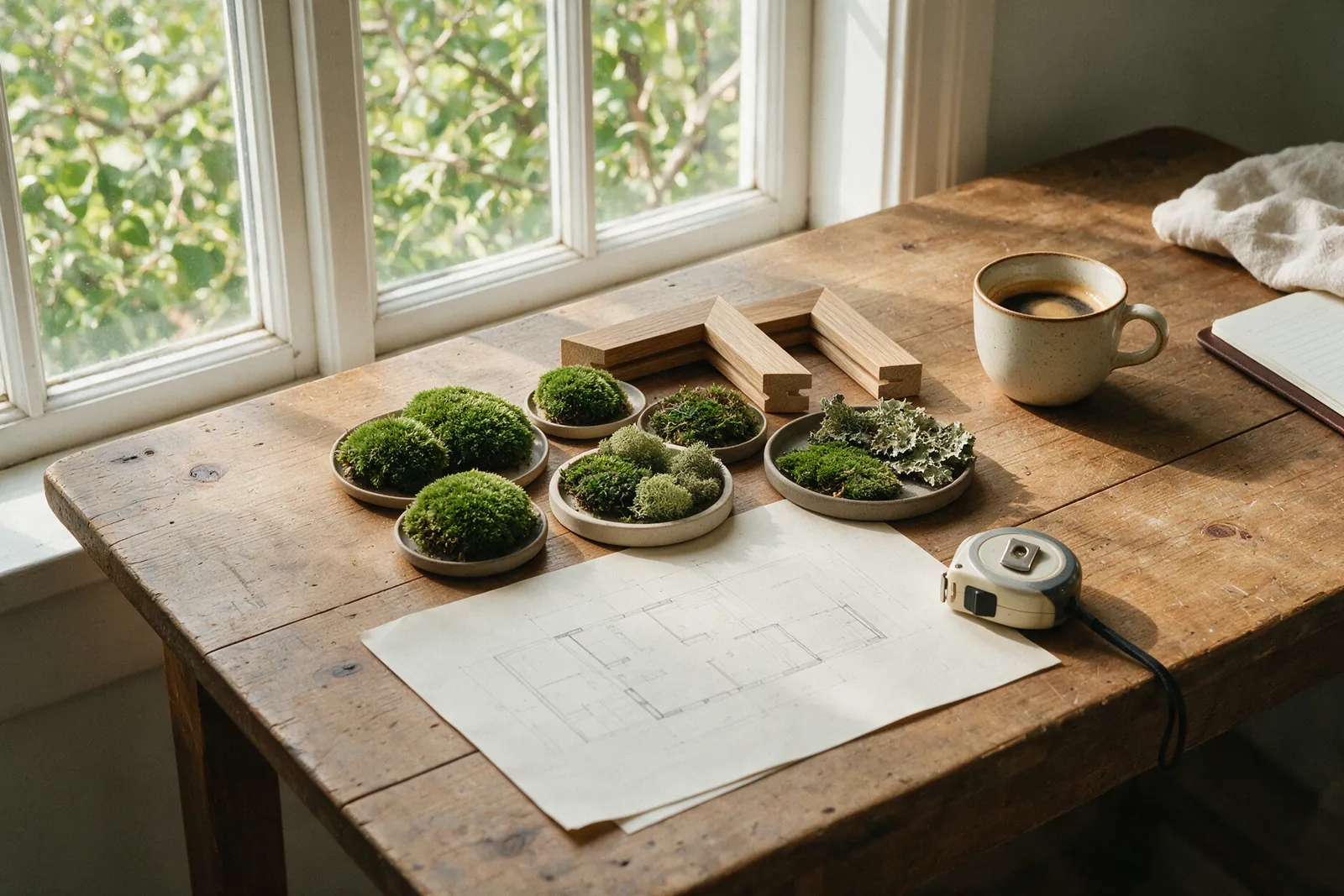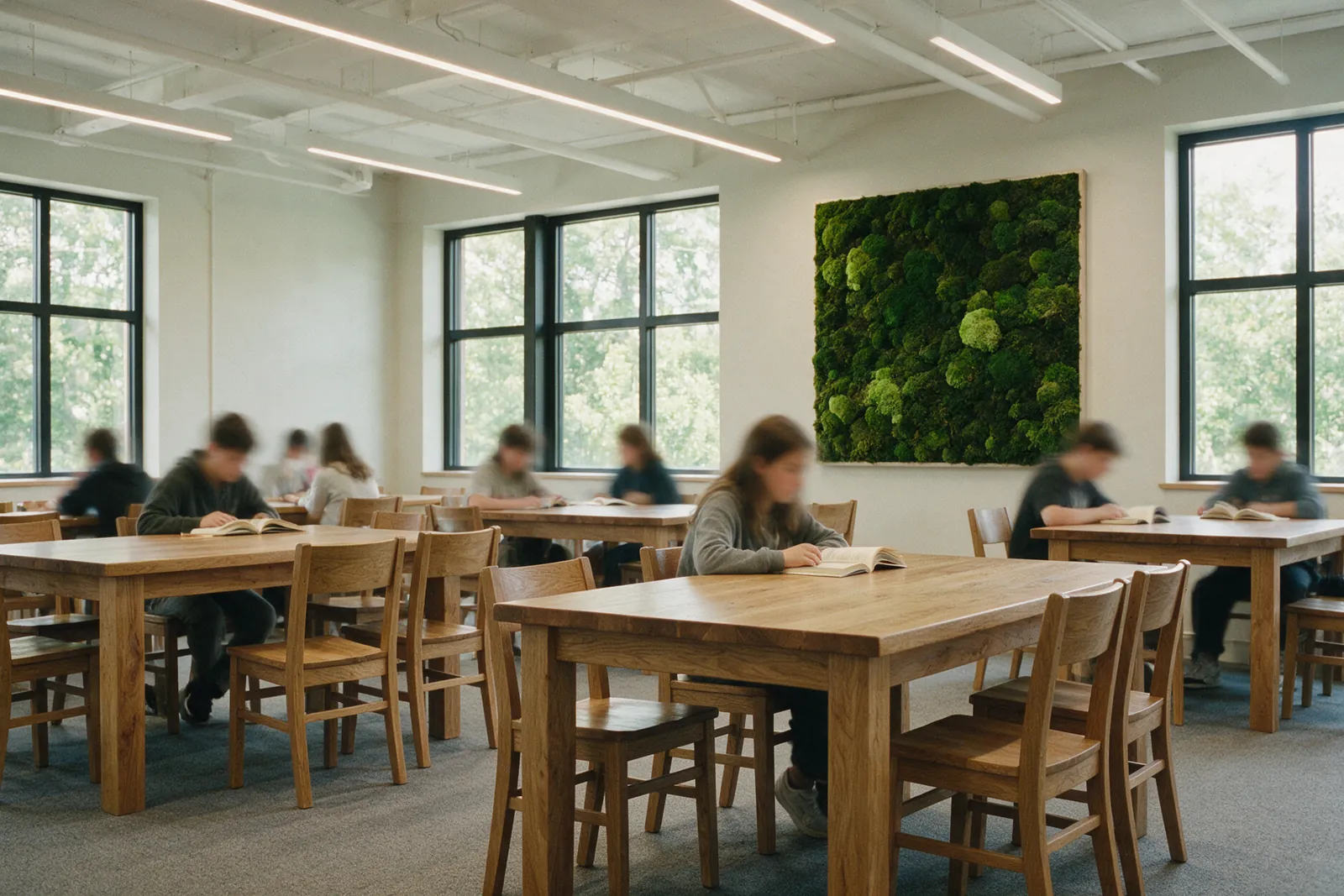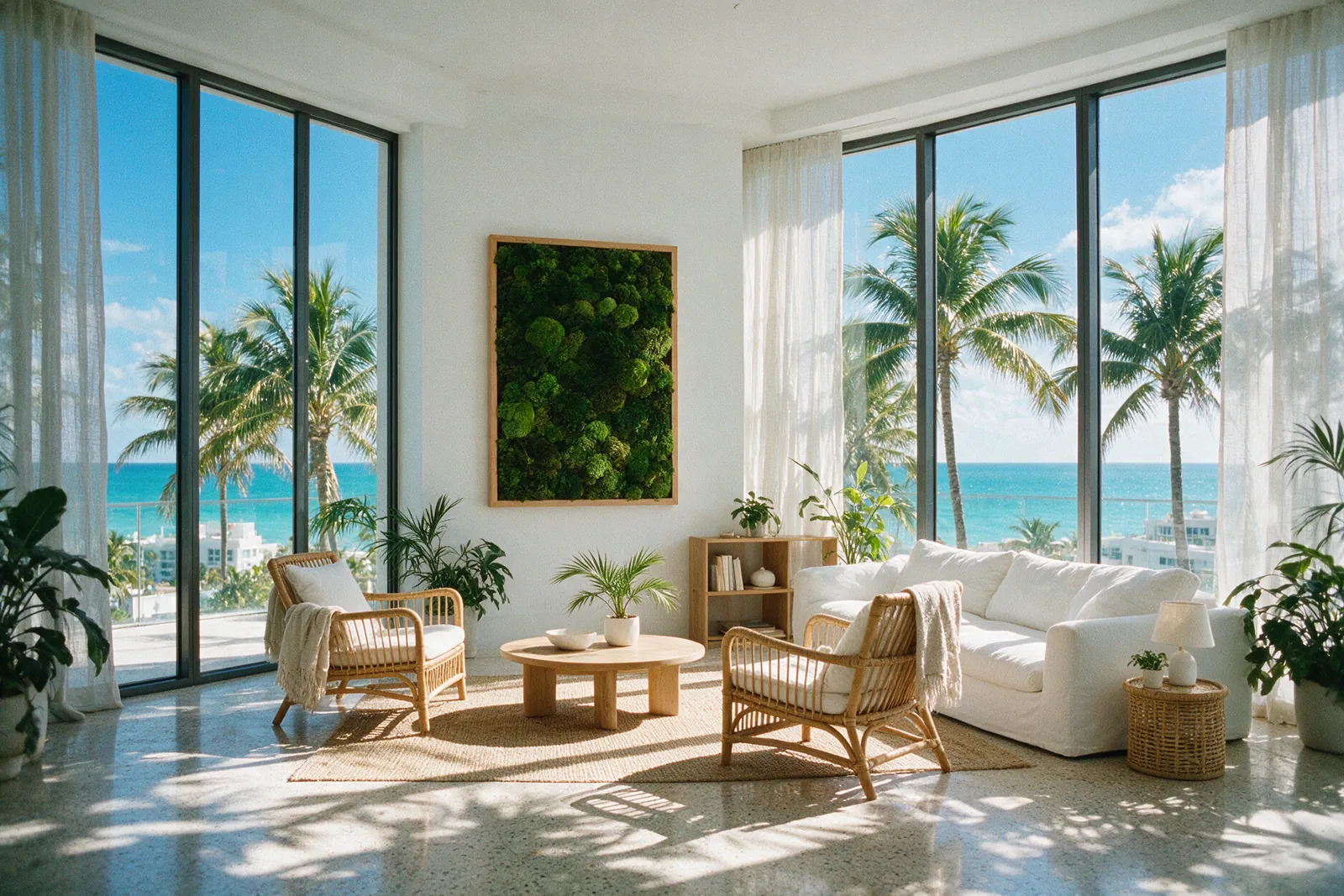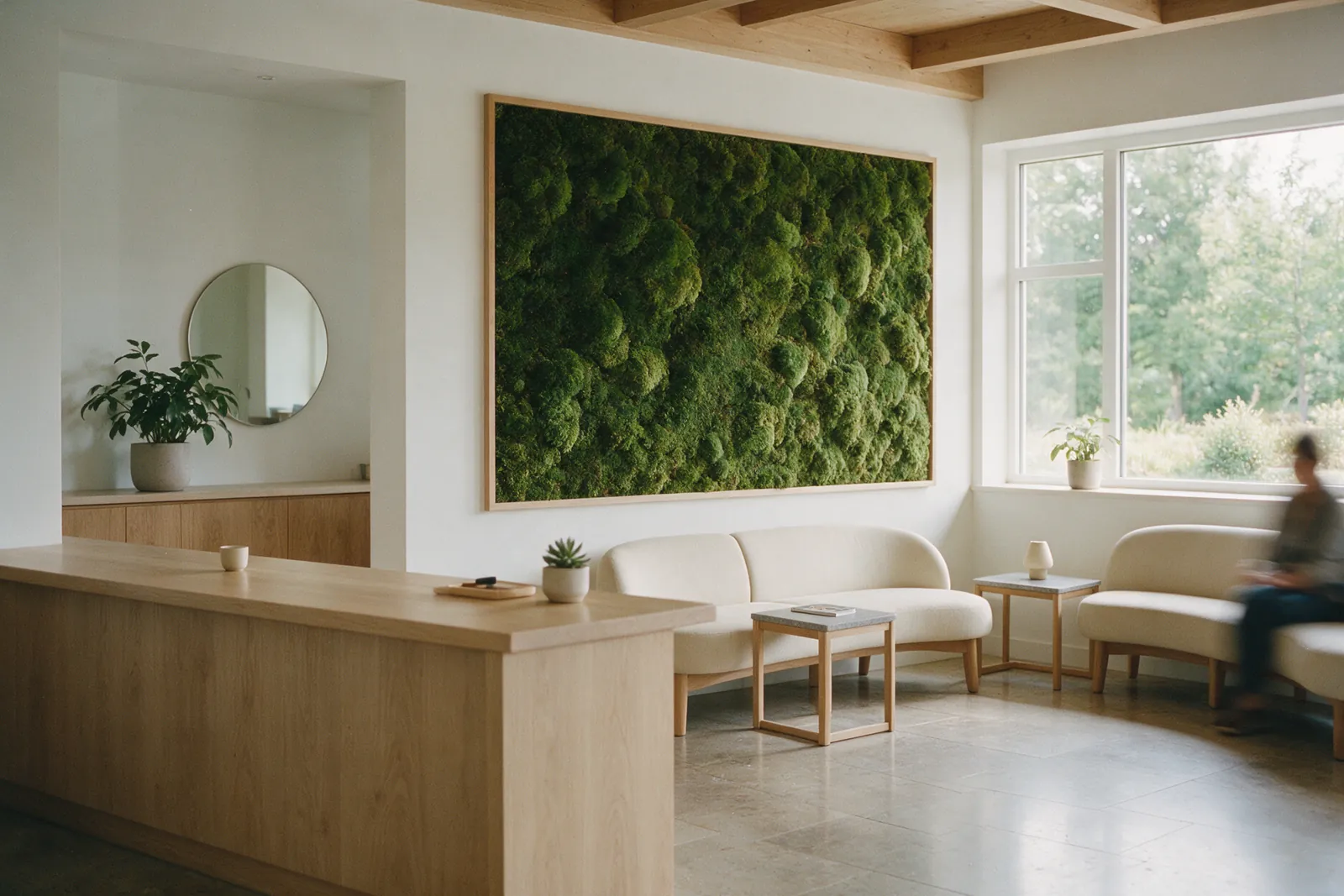
If there is one sector where biophilic design has stopped being an aesthetic option and become a clinical tool, it is healthcare. That is no coincidence: the field was born in a hospital, with Roger Ulrich’s 1984 study, and it is where it has been measured most since. This week we review the evidence specific to clinics and hospitals, how healthcare design has adopted it, and what a dental practice, an aesthetic clinic, a physiotherapy centre or a mid-sized medical centre can do on a reasonable budget.
From one study to a discipline: evidence-based design
After Ulrich’s publication, a group of architects, doctors and researchers in the United States founded the Center for Health Design, which championed what is now known as evidence-based design. The idea: plan hospitals with the same rigour used to decide a treatment, relying on studies that measure outcomes in patients and staff.
In 2008, Ulrich and colleagues published the most comprehensive review to date in the journal HERD: over 600 studies on how the hospital’s physical environment influences infections, medication errors, falls, pain, sleep, staff stress and satisfaction. Among the factors with the most consistent evidence are daylight, views of nature, noise reduction and single rooms.
Plants in the room: less pain, less anxiety
In 2009, Seong-Hyun Park and Richard Mattson of Kansas State University published a controlled trial with 90 patients recovering from an appendectomy. Half were assigned a room with plants and flowers; the other half, the same room without them. Patients in the plant group recorded:
- Lower systolic blood pressure and lower heart rate.
- Less pain, anxiety and fatigue reported in questionnaires.
- Fewer requests for painkillers.
- Higher satisfaction with the room and a more positive view of the staff, whom they perceived as more attentive.
A detail relevant to clinics: patients described the plants as the most positive element of the room and remarked that they “made the space look cared for”. Nature, besides calming, communicates care.
Waiting rooms: where it matters most
There is a moment in every medical visit when anxiety peaks and the patient has nothing to do but look: the waiting room. It is therefore the place in the clinic where biophilic design has the greatest effect per square metre.
A study by Beukeboom, Langeveld and Tanja-Dijkstra, published in 2012 in the Journal of Alternative and Complementary Medicine, compared waiting rooms in a Dutch hospital with real plants, with posters of plants and with nothing. Patients in the rooms with real plants, and to a lesser extent those with posters, reported less stress than those in the bare room. The authors conclude that even representations of nature help, but real nature helps more.
What a mid-sized clinic can do
A hospital can orient rooms towards a garden. A dental practice or an aesthetic clinic in a shopping centre or on an office floor cannot. Given the usual constraints (no daylight, no staff to care for plants, strict hygiene rules), these are the interventions with the best effect-to-cost ratio:
1. Real nature in the waiting room, opposite the seats
A mural or large preserved moss and lichen artwork on the wall the chairs face. It delivers visual connection with nature, reads as care, absorbs some noise and, unlike living plants, holds no water, soil or insects, which makes it compatible with hygiene protocols. It is cleaned with gentle air and requires no intervention from staff.
2. In the consulting room or treatment bay, in the patient’s line of sight
In a dental practice the patient spends the session looking at the ceiling or the opposite wall, tense. A moss artwork in that line of sight is the most direct application of what Ulrich measured. In an aesthetic or physiotherapy clinic, the wall seen from the treatment couch.
3. Warm light in the waiting area, neutral light in the consulting room
The cold overhead light of many clinics heightens the sense of clinical coldness. In the waiting room, warm side light; in the consulting room, the technical light required, but with materials that soften it.
4. Natural materials in what gets touched
Wooden desk, fabric seating, wood or cork cladding where regulations allow. Synthetic and cold reads as impersonal.
5. The brand on the wall
The clinic’s logo formed in lichen on moss, in the reception, works as signage, brand image and biophilic element at once. It is the spot in the clinic patients photograph and recognise. At The Pots we make it to order with each centre’s real logo: Your logo in moss.
For staff, not only for patients
Ulrich’s 2008 review notes that views of nature and planted break areas reduce stress and burnout among healthcare staff. In a small clinic, a moss piece in the team’s break area is an investment that shows in staff turnover.
What to expect
Nature in a clinic replaces nothing clinical. What it does, with solid evidence, is reduce the anxiety of those waiting and those being treated, improve the perception of care and of the staff, and make the centre memorable. And in a sector where the Google review decides the next appointment, that perception has direct value.
If you run a clinic, a practice or a medical centre, see how we approach projects for your business and which formats we use for large murals made to order.
Sources
- Ulrich, R. S. (1984). View through a window may influence recovery from surgery. Science, 224(4647), 420–421.
- Ulrich, R. S., Zimring, C., Zhu, X., DuBose, J., Seo, H. B., Choi, Y. S., Quan, X. and Joseph, A. (2008). A review of the research literature on evidence-based healthcare design. HERD, 1(3), 61–125.
- Park, S. H. and Mattson, R. H. (2009). Ornamental indoor plants in hospital rooms enhanced health outcomes of patients recovering from surgery. Journal of Alternative and Complementary Medicine, 15(9), 975–980.
- Beukeboom, C. J., Langeveld, D. and Tanja-Dijkstra, K. (2012). Stress-reducing effects of real and artificial nature in a hospital waiting room. Journal of Alternative and Complementary Medicine, 18(4), 329–333.
Cited sources are peer-reviewed studies or public reports. The Pots is not involved in that research.