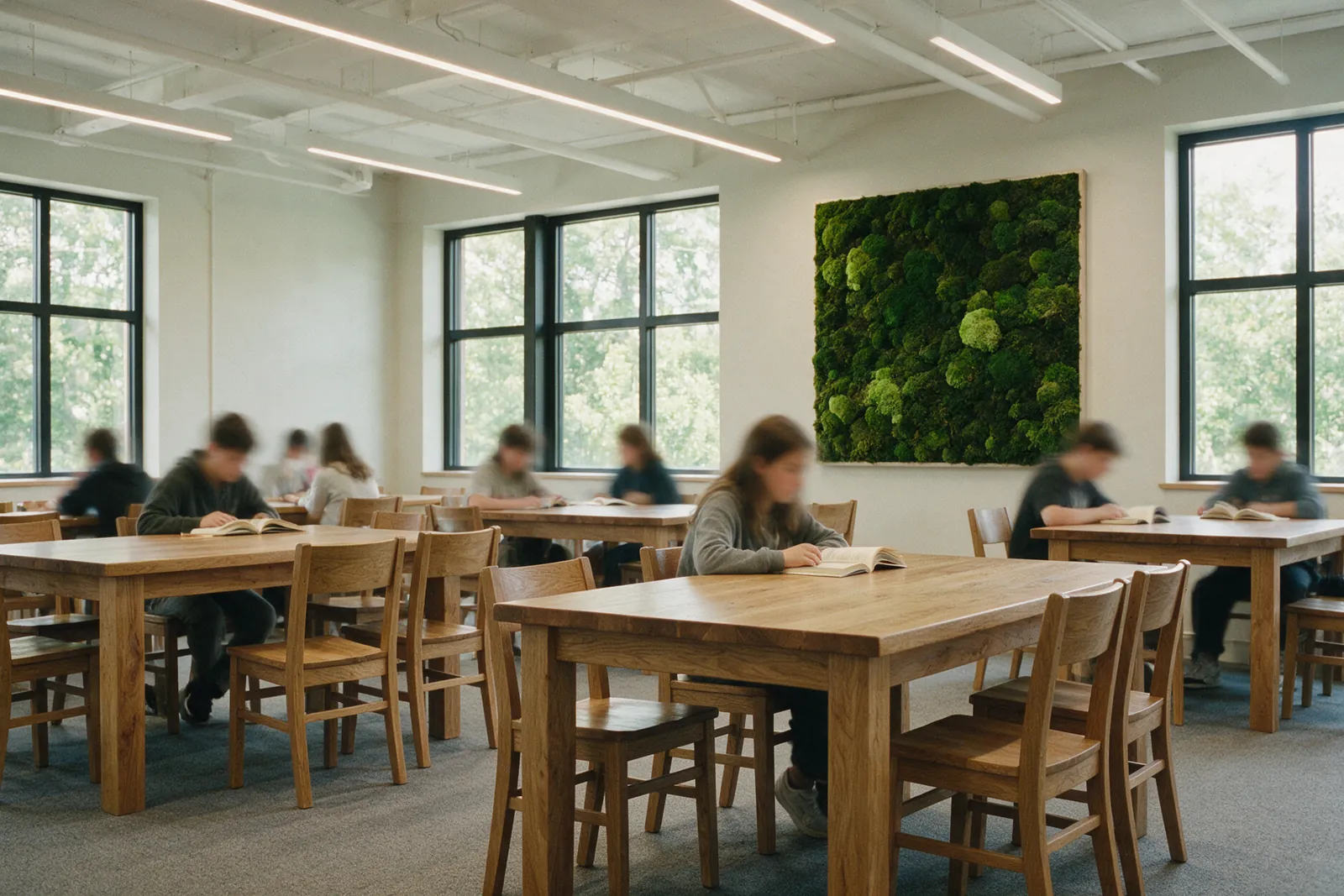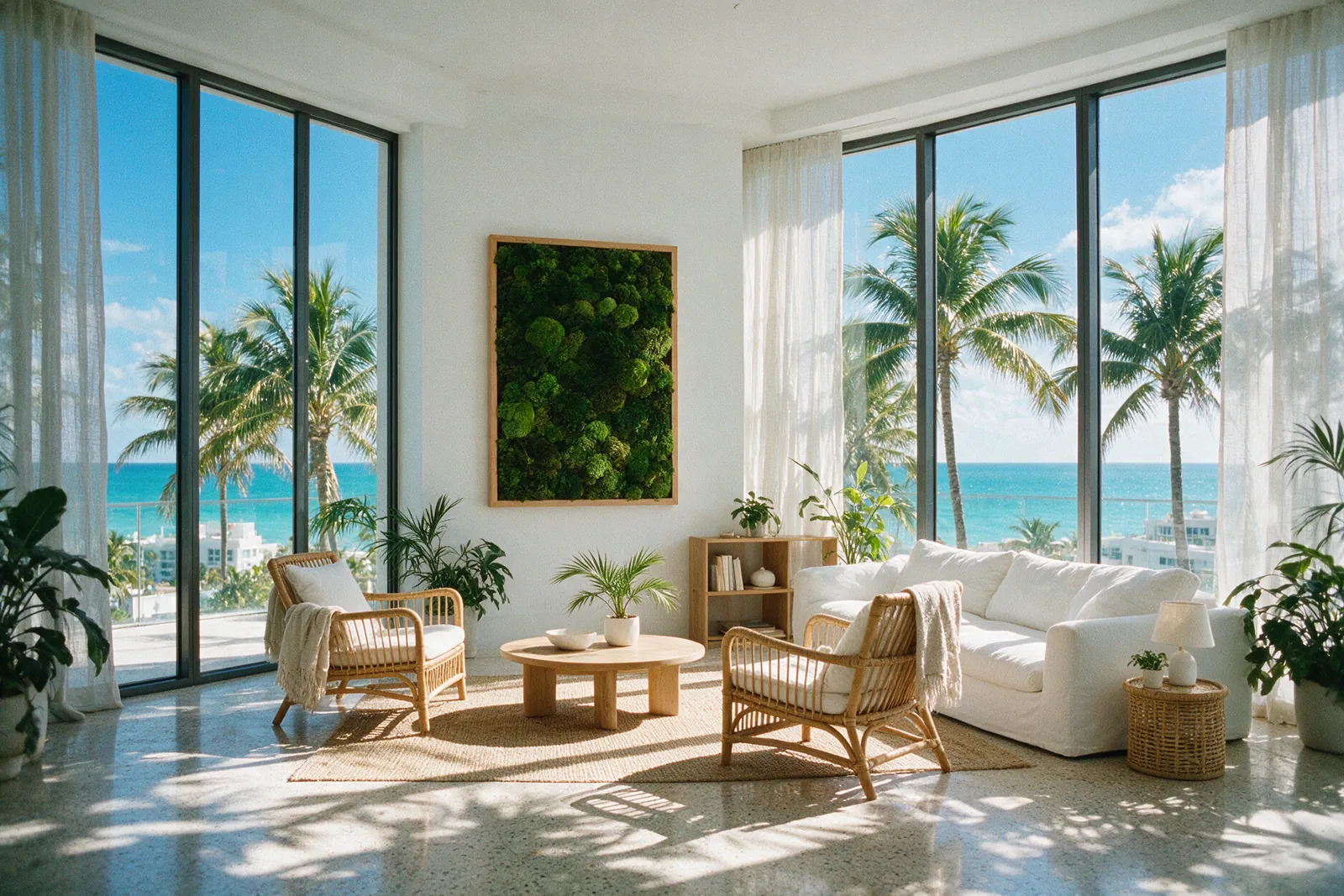
It is the question that closes almost every conversation we have opened in this journal: fine, nature indoors reduces stress, improves attention and gets remembered. How much does it cost? This week we answer with figures, no hedging, and with the part that is almost never explained: what it costs to maintain and what research says about the return. It is a guide to biophilic design prices for homes and businesses, with the criteria we use at The Pots to recommend one option or another.
The four levels of investment
Biophilic design can be approached at four levels of spend, from the most accessible to the most ambitious. They are not mutually exclusive: the best projects combine several.
Level 1: materials and light (from $0)
Rearranging so that desks move towards windows, replacing a central ceiling light with warm side light, choosing wood and linen over laminate and synthetics when it is time to renew. It has no price of its own: it is a way of making decisions that were going to be made anyway. It is the level most often forgotten and the one that most changes how a space reads.
Level 2: pieces of real nature ($140 to $4,000)
This is the level with the best effect-to-cost ratio, because it places nature exactly where people look. At The Pots, at store prices:
| Piece | Indicative price | Maintenance |
|---|---|---|
| Basic moss frame (from 12 × 12 in) | From $140 | None |
| Basic moss frame, medium formats | $180 to $700 | None |
| One-of-one limited edition piece (signed, never repeated) | From $685 | None |
| Big Basics large format (71 in wide and up) | Quoted per project | None |
Basic frames are priced at $185 per square foot and limited edition pieces at $225 per square foot; the final price depends on the exact size. All of them hang like a picture, with no building work.
Level 3: made-to-measure murals and logos (per project)
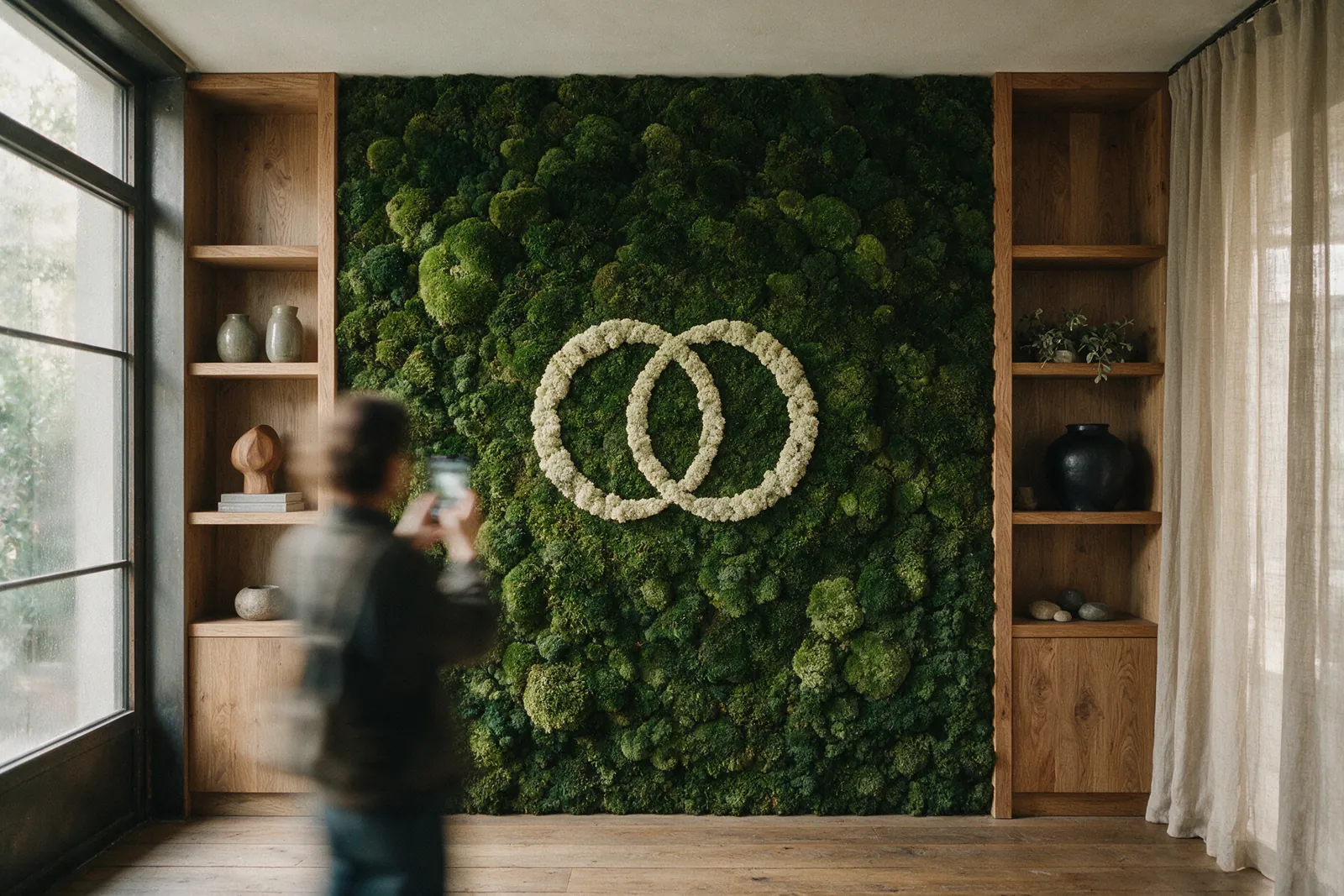
Full walls of preserved moss and lichen, with a custom composition or the business logo, for receptions, dining rooms, meeting rooms and lobbies. The price depends on square footage, complexity of the composition and installation, and is quoted after a visit or from drawings. As a reference, a reception mural between 6 and 13 feet wide is an investment comparable to good reception furniture, and lasts five to ten years with no maintenance. Request a proposal at Large formats and Your logo in moss.
Level 4: living green walls and integrated projects (per project)
Walls of living plants with automatic irrigation, grow lighting and professional maintenance. It is the most spectacular option when there is daylight and an operating budget. Its initial cost per square foot is usually several times that of a preserved mural, plus a monthly maintenance contract and periodic plant replacement. It is the right option for atria, courtyards and lit interior façades; it is not for corridors, interior rooms or businesses without gardening staff.
The cost nobody mentions: maintenance
The purchase price is only the first figure. Over a five-year horizon, which is what we use for comparison, the differences are large:
- Living plants in pots. Low initial cost, but weekly watering, replacement of those lost (in offices and unlit venues, most within the first year) and, if outsourced, a monthly service.
- Living green wall. Monthly maintenance contract, water and electricity, plant replacement and irrigation system checks. Over five years, maintenance usually exceeds the installation cost.
- Preserved moss. Zero. A gentle air clean once or twice a year. Over five years, the total cost is the purchase price.
That is why we recommend preserved moss in every interior space without daylight, and living plants where there is light and someone who enjoys caring for them. The detailed comparison is in the article on preserved moss and living plants.
What to prioritise on a limited budget
If only one thing can be done, the rule is the one we have repeated throughout this journal: real nature in the place people look at most.
- In a home: opposite the sofa or opposite the bed. A basic frame or a one-of-one piece. See for your home.
- In an office: the front wall of the main meeting room and the wall seen from the desks.
- In a business open to the public: the reception wall or the main dining-room wall, ideally with the logo.
- In a clinic: the wall the waiting-room chairs face.
What research says about the return
Here it is worth separating what has been measured from what gets promised. What has been measured:
- Productivity and wellbeing in offices. 15% higher productivity in the Cardiff and Exeter experiment; 15% higher wellbeing and 6% higher productivity reported in the Human Spaces survey of 7,600 workers (article). Terrapin, in The Economics of Biophilia, estimates that a company’s staff cost is about a hundred times the building’s energy cost, so a small improvement in performance or absenteeism is worth more than any energy saving.
- Spending and dwell time in retail. Willingness to pay 9 to 12% more in settings with greenery (article).
- Rate and ratings in hotels. Rooms with nature views sold at higher rates; better overall ratings for lobbies with biophilic elements (article).
- Recovery and satisfaction in clinics. Less pain, anxiety and painkiller requests in rooms with plants; less stress in waiting rooms with real nature (article).
What cannot be promised: that a specific mural will produce a specific percentage in a specific business. The studies measure averages across large groups. What can be stated is that the direction of the effect is consistent across every sector studied, that the cost is small compared with staff, rent or marketing, and that a preserved piece works for years with no added expense.
How to request a quote without wasting time
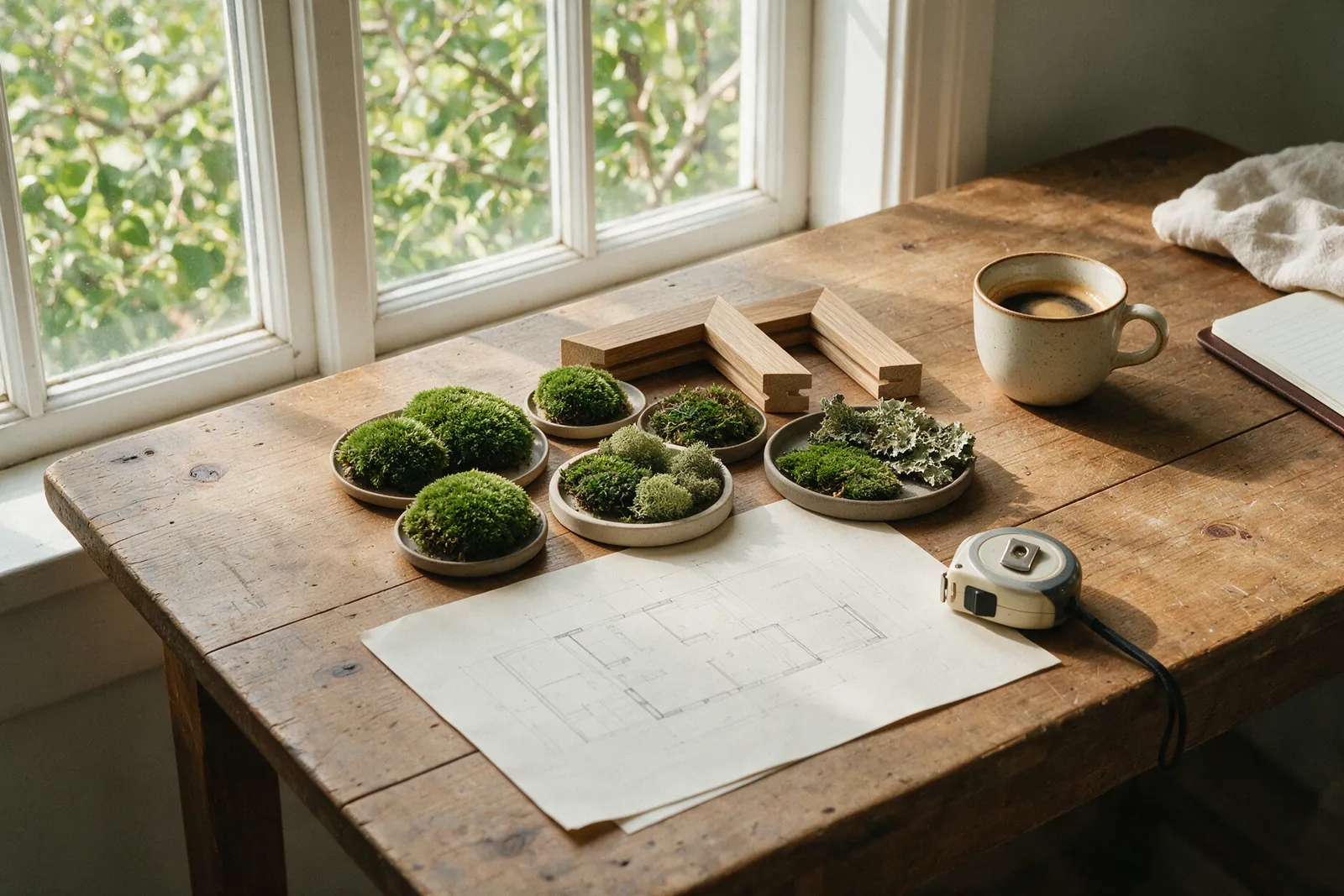
For a custom project, three pieces of information are enough for a first figure: the wall measurements (width and height), a photo of the space in normal light and, for a business, the logo in vector format. With that we prepare a proposal with composition, size and a fixed price. Send it from for your business or come by the store at Town Center at Boca Raton to see the materials in person.
Sources
- Terrapin Bright Green (2012). The Economics of Biophilia: Why Designing with Nature in Mind Makes Financial Sense.
- Nieuwenhuis, M., Knight, C., Postmes, T. and Haslam, S. A. (2014). The relative benefits of green versus lean office space. Journal of Experimental Psychology: Applied, 20(3), 199–214.
- Cooper, C. and Browning, W. (2015). Human Spaces. Interface.
- Wolf, K. L. (2005). Business district streetscapes, trees, and consumer response. Journal of Forestry, 103(8), 396–400.
- Park, S. H. and Mattson, R. H. (2009). Ornamental indoor plants in hospital rooms. Journal of Alternative and Complementary Medicine, 15(9), 975–980.
Cited sources are peer-reviewed studies or public reports. The Pots is not involved in that research.