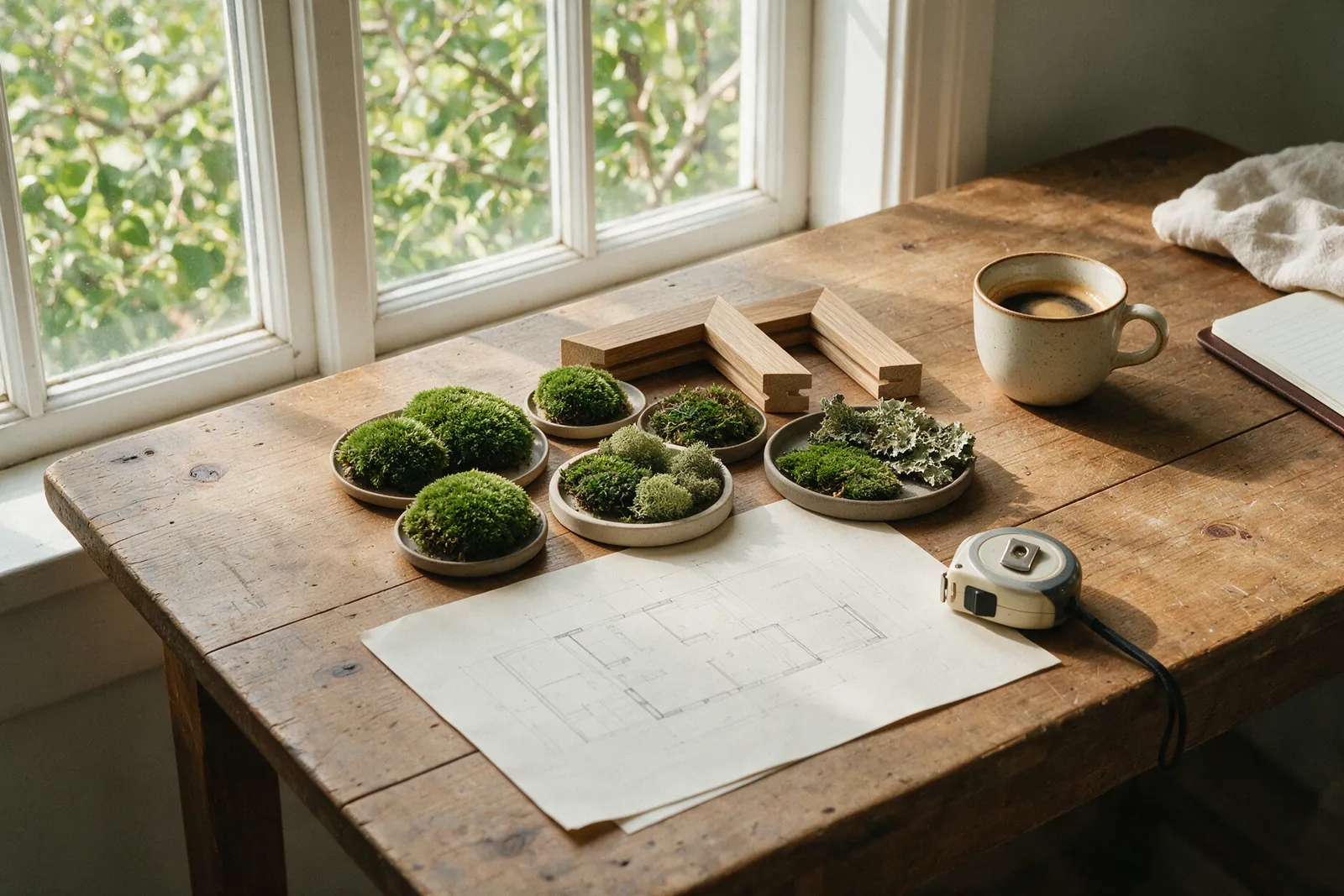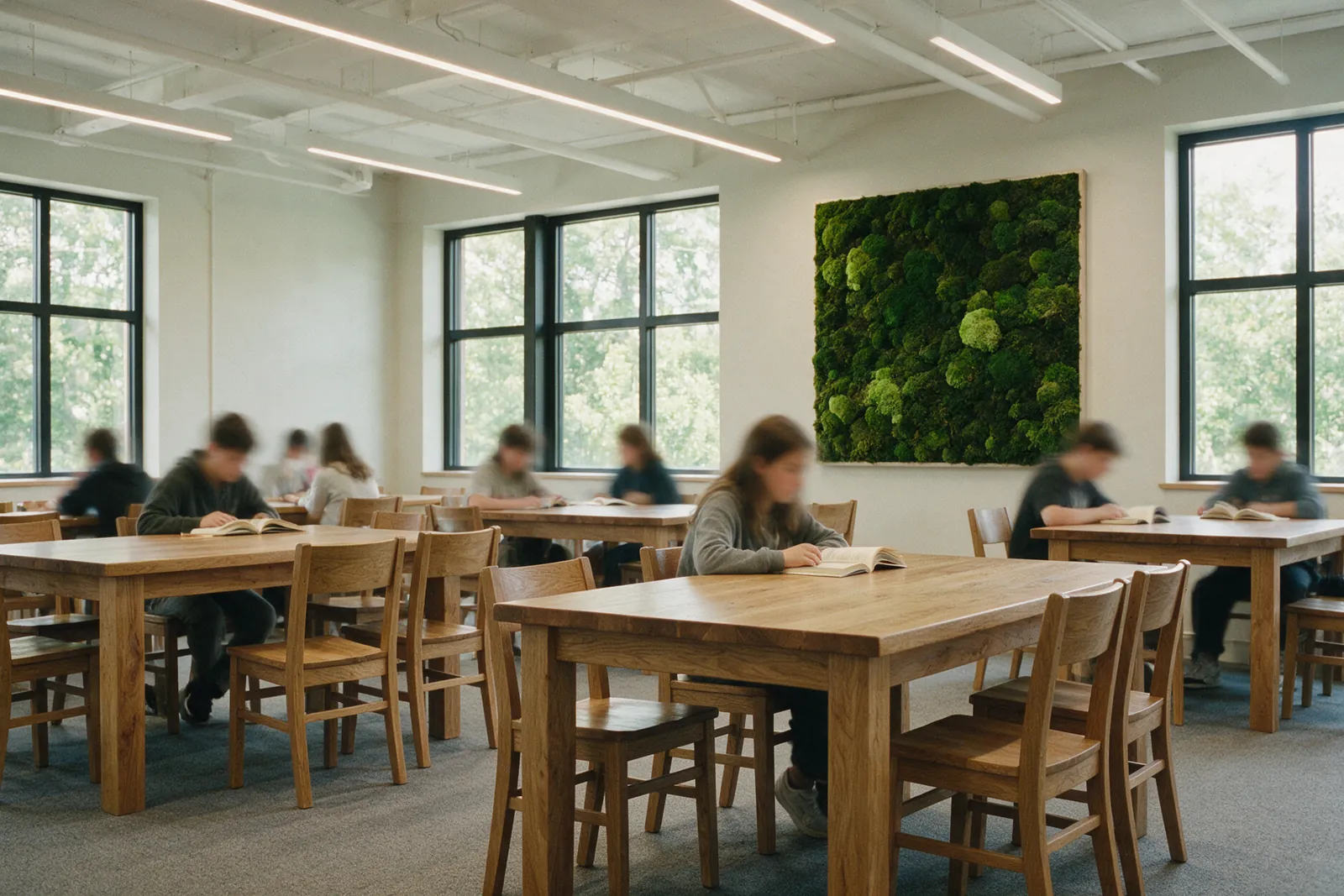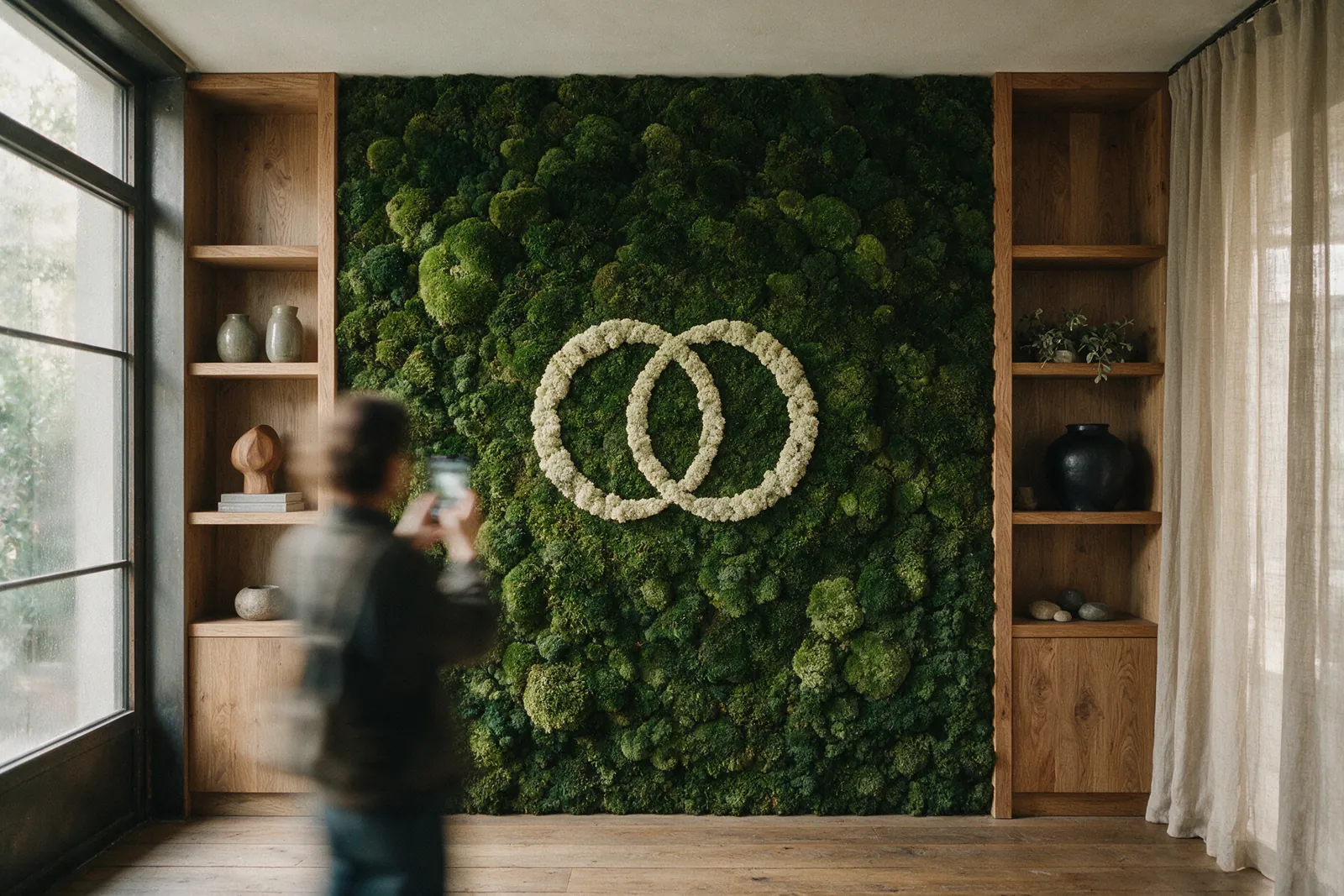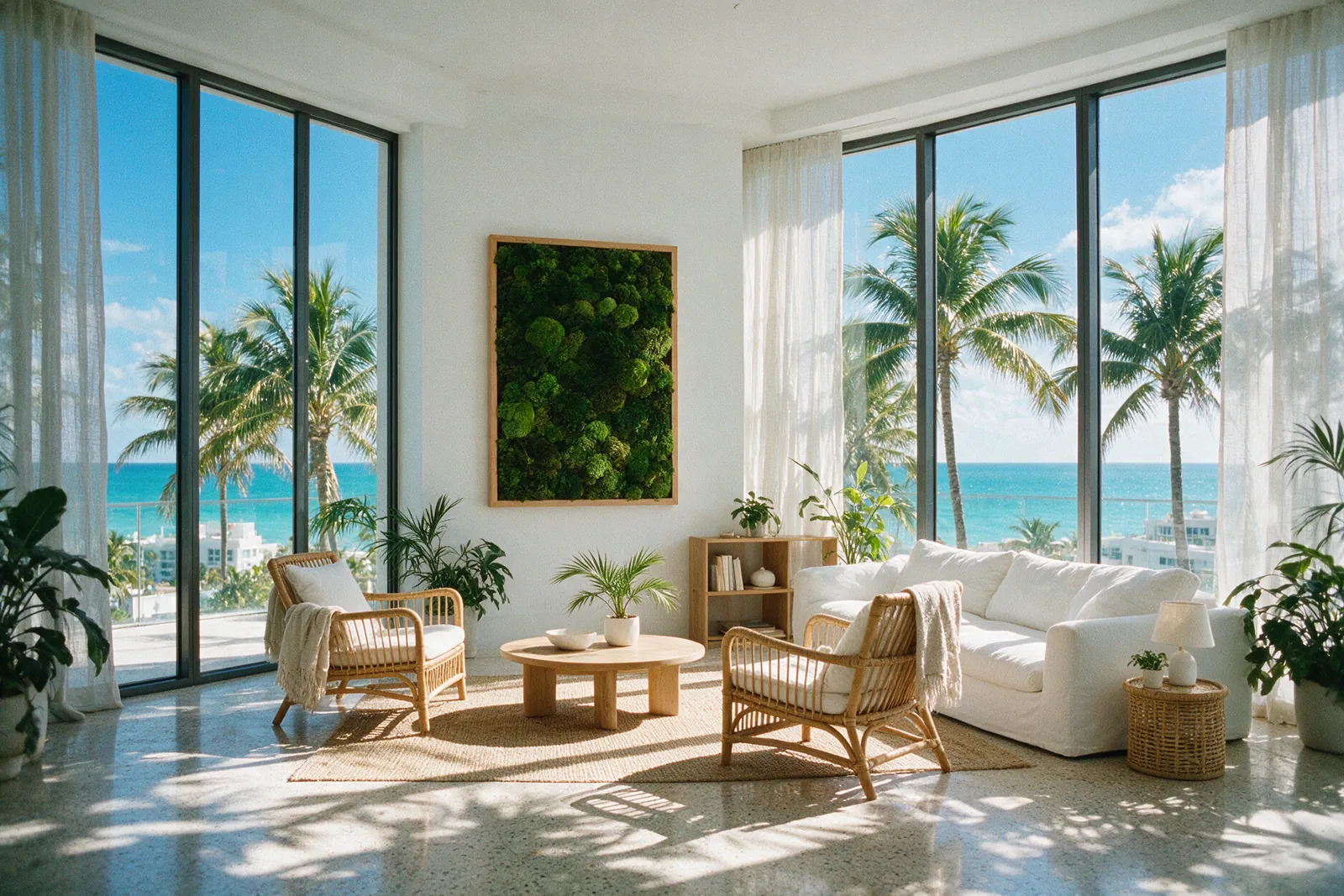
Florida has a paradox: it is one of the places with the most exuberant nature in the country and, at the same time, one where the most hours are spent in closed, air-conditioned interiors. From June to October, life in Miami, Fort Lauderdale or Boca Raton happens in homes, offices, malls and cars at 72 degrees, with the blinds half down against the sun. Biophilic design in Florida has to solve that paradox: how to bring inside the nature that is thirty feet away, on the other side of the glass. This guide gathers what we have learned in the Boca Raton store and in projects across South Florida.
The problem with indoor plants in Florida
It seems contradictory, but many indoor plants have a hard time in Florida. The reasons:
- Continuous air conditioning. The dry, cold air from the vents dehydrates the leaves of tropical plants, precisely the ones that thrive outside. Plants placed near an air outlet deteriorate within weeks.
- Filtered light. Because of the heat, windows carry tinted glass, solar-control film and blinds. The light that reaches inside is far less than the sun outside suggests.
- Outdoor humidity versus indoor humidity. Outside, 70 to 90% relative humidity; inside, with air conditioning, 45 to 60%. Every time a door opens, the jump is abrupt.
- Pests. The warm climate keeps mealybugs, mites and fungus gnats active all year.
None of this means you should not have living plants in Florida. It means placing them where they have light and away from the vents, and accepting that they need care. For the rest of the interior, another strategy is needed.
How preserved moss behaves with humidity
Preserved moss has an ideal relative humidity range of 40 to 70%. Below that, over time, it can become brittle; above it, without ventilation, it can soften or lose shape. This is a real limitation in two kinds of climate: very dry ones (interiors with heavy winter heating in the north) and very humid ones without control (an enclosed porch with no air conditioning in August).
The typical Florida interior, with air conditioning holding humidity between 45 and 60%, sits exactly in the ideal range. That is why preserved moss keeps especially well in South Florida homes, offices, hotels and clinics: the same system that makes living plants suffer is what keeps moss stable.
Two practical precautions we give every client:
- No direct sun. A moss artwork facing a west-facing window without protection fades within months. It hangs on walls that do not get the afternoon sun, or behind solar-control glass.
- Indoors, not on the porch. No lanai, no enclosed unconditioned porch, no bathroom with a shower and no extractor. In those spaces humidity exceeds the range and the piece suffers.
With those two conditions, a preserved mural in Florida keeps its appearance for five to ten years. The full comparison is in the article on preserved moss and living plants.
Materials that withstand the climate
Biophilic design is not only vegetation: it is also Terrapin’s pattern 9, material connection with nature. In Florida, some natural materials work better than others:
- Dense, oiled hardwoods (teak, ipe, treated white oak) rather than softwoods, which move with humidity.
- Limestone and fossil coral (coral stone or keystone), the local material par excellence, in floors and cladding.
- Terrazzo, a tradition of Miami buildings since the 1930s, cool and durable.
- Natural fibres (rattan, jute, sisal) in conditioned interior areas, not outdoors.
- Linen and cotton in upholstery and curtains, which breathe better than synthetics.
Bringing the Florida landscape inside
One of the opportunities of biophilic design in Florida is the reference to place (the “culture and place” element valued by the WELL standard). The South Florida landscape is recognisable: the Everglades, the mangroves, the white-sand coast, the royal palms, the saturated green of tropical vegetation.
In preserved-moss compositions this translates into pieces that evoke that landscape without depicting it literally: gradients of intense greens with veins of white lichen like the foam at the shoreline, bun-moss compositions that recall mangrove canopies, or organic shapes inspired by the Everglades channels seen from above. They are pieces an out-of-town guest recognises as “from here” and a resident feels as their own.
Applications by type of space in South Florida
- Homes and condos. A moss artwork on the living-room wall that does not face the window, away from the afternoon sun; living plants on the lanai and by east-facing windows. See for your home.
- Offices in Brickell, Downtown or Boca. Interior floors without daylight where preserved moss is the only viable nature; warm light to offset tinted glass.
- Hotels and restaurants on the coast. Conditioned lobbies and dining rooms, with moss walls that work the same in high and low season, with no gardener.
- Clinics and practices. Waiting rooms with constant air conditioning, ideal for preserved moss and hostile to living plants.
A note on hurricanes
The question comes up every season. Preserved moss is not a structural or exterior element; it hangs like a picture, indoors. In the event of evacuation or a prolonged power cut, the only precaution is the same as for any artwork: if the interior will be unconditioned for days in August, cover the piece or move it to a ventilated area. Under normal conditions, including outages of a few hours, no action is needed.
What to expect
In Florida, the best biophilic strategy is to combine: living plants where there is real light and someone to care for them, preserved moss elsewhere, local materials that hold up, and a reference to the landscape that makes the space belong here and not just anywhere.
Our store is at Town Center at Boca Raton, and we work on projects from Palm Beach to Miami. If you want to see pieces in person before deciding, come by; and if you would rather start with the project, tell us at for your business.
Sources
- Browning, W. D., Ryan, C. O. and Clancy, J. O. (2014). 14 Patterns of Biophilic Design. Terrapin Bright Green.
- International WELL Building Institute. WELL v2, feature M02 Nature and Place.
- Indoor and outdoor relative humidity data for South Florida: National Weather Service, Miami-South Florida.
Cited sources are peer-reviewed studies or public reports. The Pots is not involved in that research.