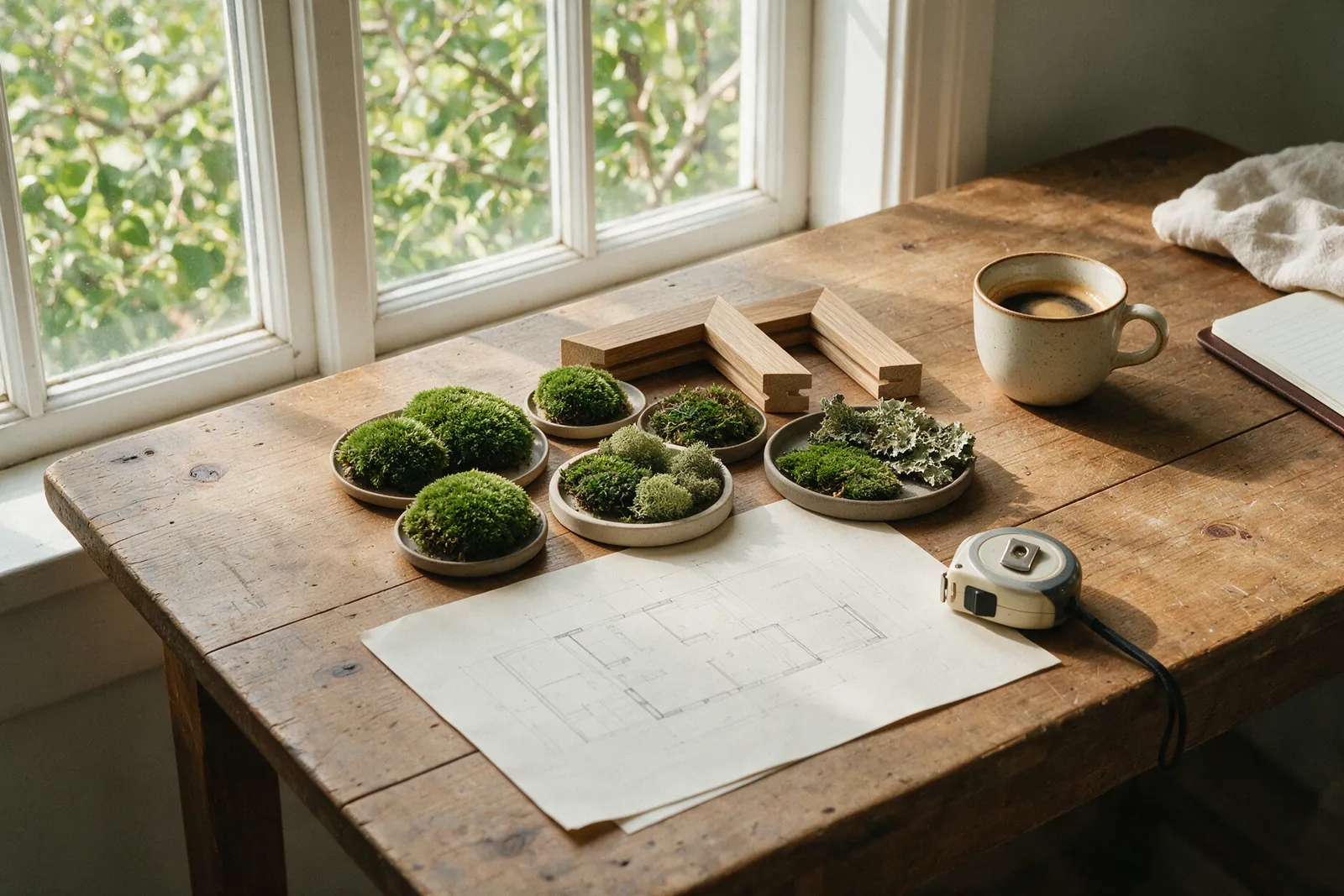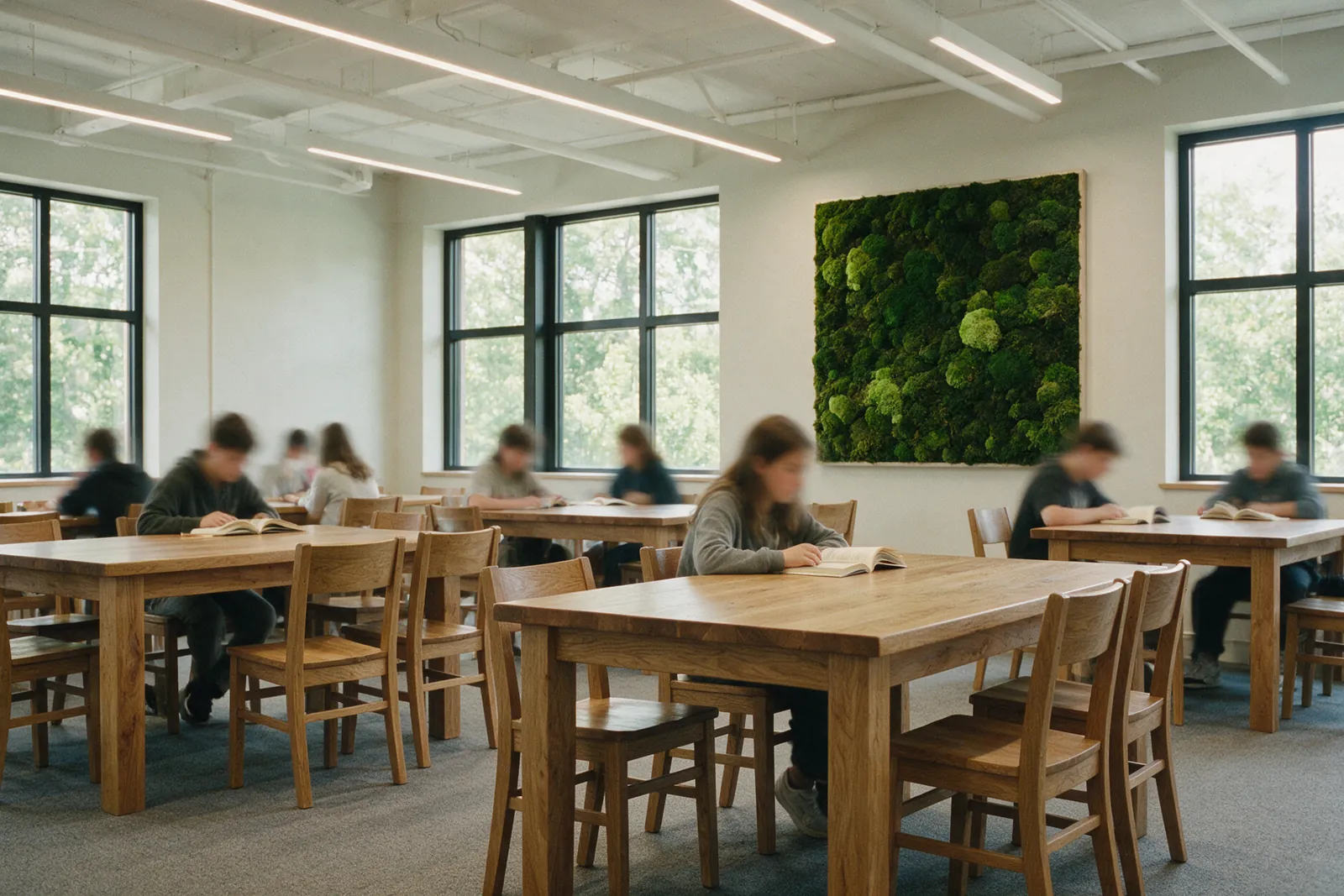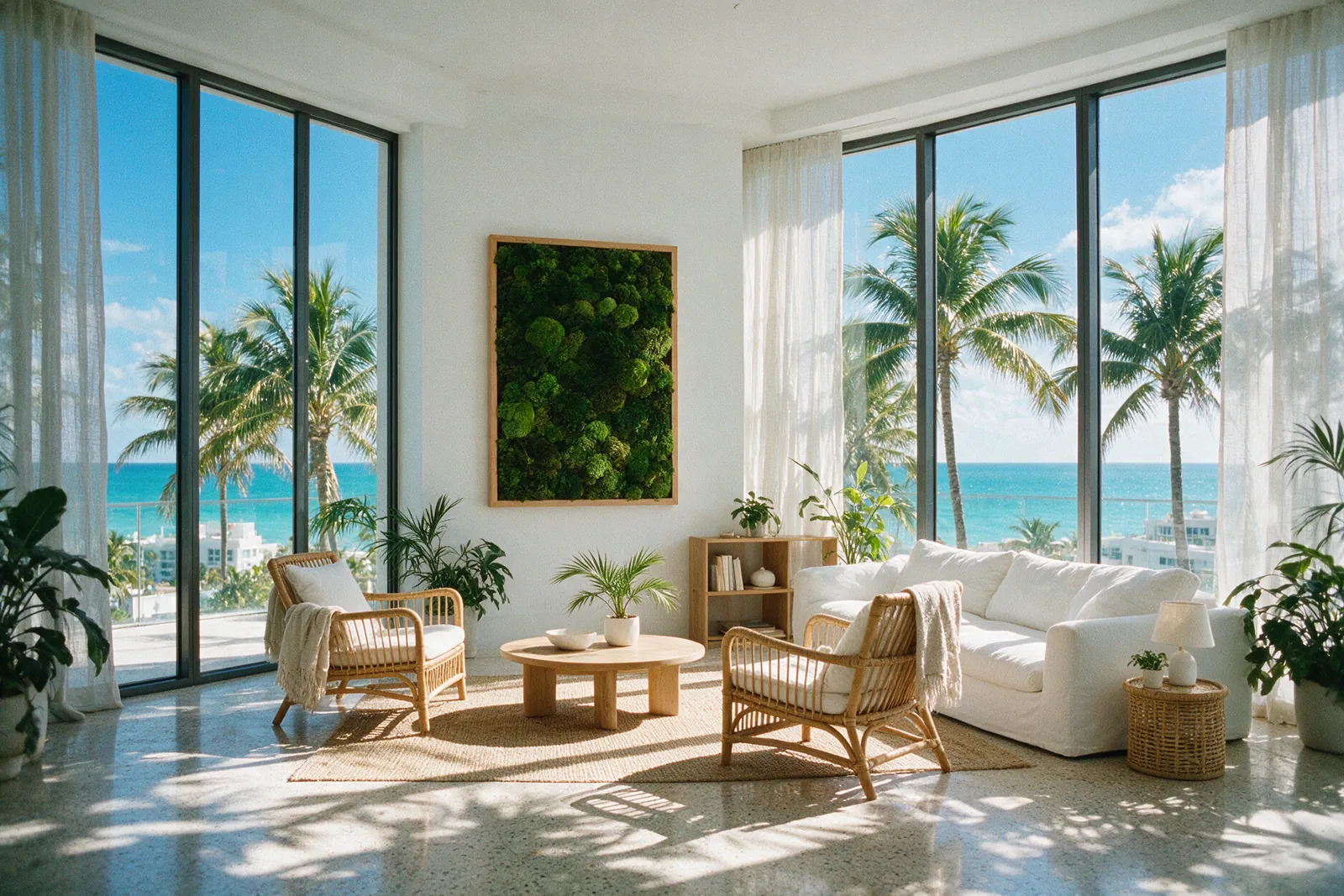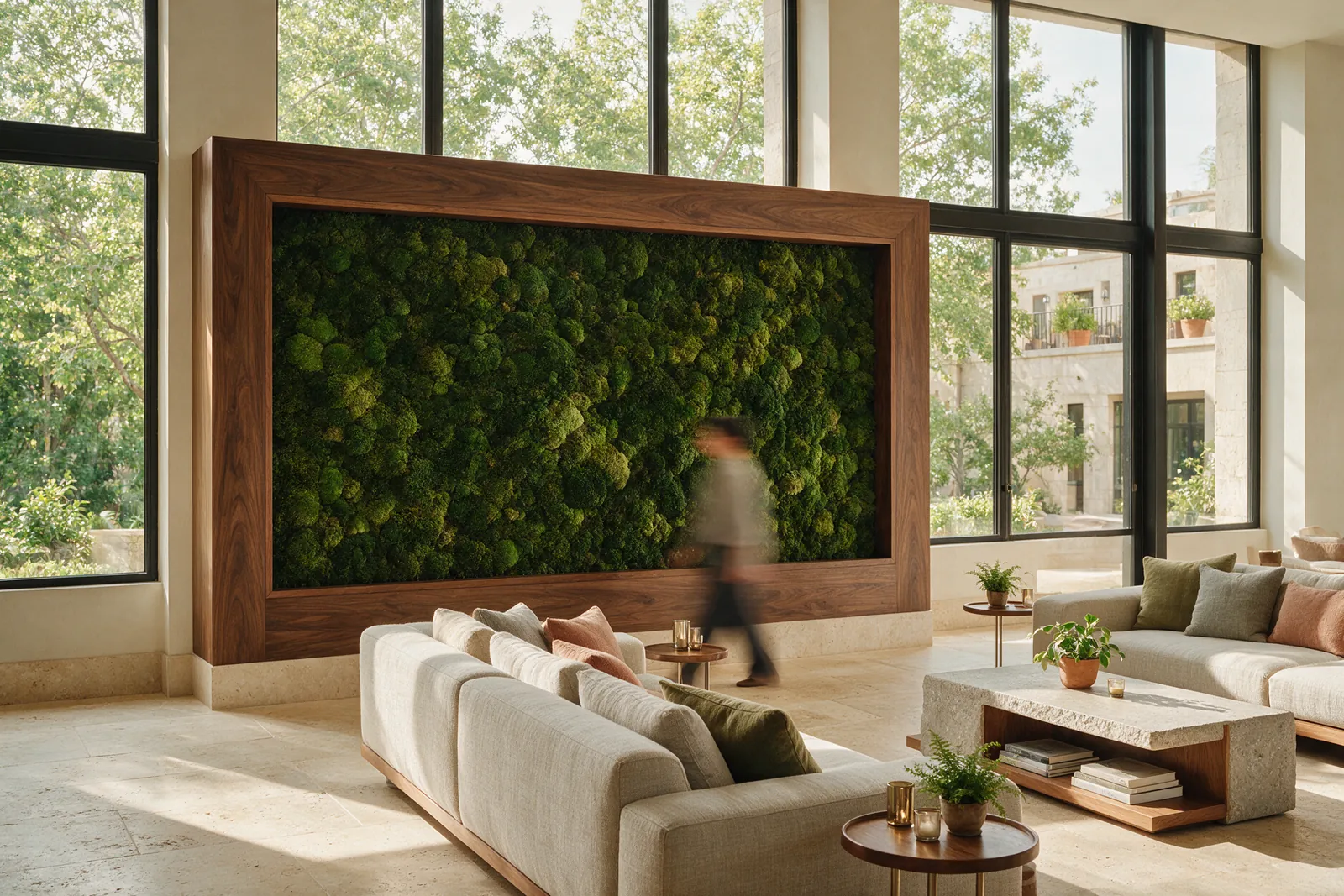
More and more hotels, offices, clinics and homes are talking about biophilic design. The term shows up in architecture magazines, in corporate renovation briefs and in the searches of anyone who wants their living room to feel different. It is not a decorating trend, nor an elegant way of saying “add some plants”. It is a discipline with forty years of research behind it and one simple idea at its core: people function better when nature is close.
In this guide we explain exactly what biophilic design is, where it comes from, which principles define it and which benefits science has measured. It is the first article in a weekly series in which we will unpack each study and each practical application.
A definition of biophilic design
Biophilic design is the practice of designing buildings and interiors so that people keep a direct or indirect contact with nature. That connection is sought on purpose: through daylight, real vegetation, organic materials, views outside, water, patterns and shapes that recall living things, and spatial configurations the body recognises as safe and stimulating.
The difference from plant décor is intent. A plant in a corner is an ornament. A preserved-moss wall placed exactly where the eye lands when entering a reception, with side light and a wooden bench in front, is biophilic design: someone has thought about which experience of nature to trigger and at which moment.
Where the word biophilia comes from
The term biophilia was popularised by Harvard biologist Edward O. Wilson in his 1984 book of the same name. His hypothesis: human beings have an innate affinity for life and living systems, because we evolved for hundreds of thousands of years in natural settings and not between flat walls, fluorescent light and air conditioning. Our nervous system is still calibrated for a world of trees, water, horizon and changing light.
The person who turned that hypothesis into a design discipline was Stephen Kellert, professor at the Yale School of Forestry and Environmental Studies. In 2008 he co-edited Biophilic Design: The Theory, Science and Practice of Bringing Buildings to Life and in 2015, with Elizabeth Calabrese, published The Practice of Biophilic Design, still the reference manual. Kellert insisted that biophilia is not a style but a condition of healthy architecture, like ventilation or light.
Three kinds of nature experience
Kellert and, later, the New York consultancy Terrapin Bright Green organise biophilic design into three families of experience. It is the most useful way to understand what can be done in a real space.
1. Nature in the space. Direct presence: plants, moss, water, daylight, moving air, natural sounds, views of landscape. It is the family with the most scientific evidence, because it triggers the physiological calming response most immediately.
2. Natural analogues. Indirect presence: organic materials such as wood, stone or fibres; the colours and textures of nature; curved and branching forms; fractal patterns the eye reads as alive even when no plant is in front of it.
3. Nature of the space. Spatial configurations inherited from our past as a species: prospect (seeing far and unobstructed), refuge (a protected spot from which to observe), mystery (the promise of something beyond that invites you forward) and risk (a safe thrill, like a high balcony).
A preserved moss and lichen artwork works in the first two families at once. It is real nature (not plastic or print) and, through its texture, brings the fractal complexity and range of greens the brain processes as living vegetation. Next week we will devote a whole article to the 14 patterns Terrapin derived from these three families.
Which benefits science has measured
Four decades of research point in the same direction from very different angles. Some results we will expand on in coming articles:
- Faster recovery. In 1984 Roger Ulrich showed in the journal Science that surgery patients with a view of trees left hospital sooner and needed fewer painkillers than those facing a wall.
- Less stress. Ulrich’s stress reduction theory and Rachel and Stephen Kaplan’s attention restoration theory explain why nature lowers nervous-system arousal and recharges the capacity to concentrate.
- More productivity and creativity. The Human Spaces report (2015), covering 7,600 workers in 16 countries, associated natural elements in the office with 15% higher reported wellbeing, 6% higher productivity and 15% higher creativity.
- A better customer experience. In retail and hospitality, spaces with greenery are perceived as more pleasant and of higher quality, and people stay in them longer.
None of these studies says a plant works miracles. They say something more interesting: that the physical environment measurably shapes how we feel and perform, and that nature is one of the cheapest levers for improving it.
Biophilic design at home, in the office and in a business
At home, biophilia means letting the light in, choosing materials that age well (wood, linen, ceramics) and placing nature where the eye rests: opposite the sofa, at the entrance, in the bedroom. A preserved-moss artwork solves the “real nature, no care” problem in homes with little light or frequent travel.
In the office, the priority is the eye line of the person working: what they see when they look up from the screen. A mural on the front wall of a room, greenery in circulation areas and daylight at the desks are the three interventions with the best return.
In a business open to the public (hotel, restaurant, clinic, shop), biophilia also works for the brand. A large-format moss piece in the reception gets photographed, remembered and shared. It is décor that doubles as emotional signage.
Where to start
No renovation needed. A space becomes biophilic with three decisions taken in order: light first, then materials, and finally real nature in the place people look at most. To see how we apply this approach, look at what we do for your home and for your business. And if you would rather start with the science, next week we publish the 14 patterns of biophilic design explained with examples.
Sources
- Wilson, E. O. (1984). Biophilia. Harvard University Press.
- Kellert, S. R., Heerwagen, J. and Mador, M. (2008). Biophilic Design: The Theory, Science and Practice of Bringing Buildings to Life. Wiley.
- Kellert, S. R. and Calabrese, E. (2015). The Practice of Biophilic Design.
- Browning, W., Ryan, C. and Clancy, J. (2014). 14 Patterns of Biophilic Design. Terrapin Bright Green.
- Ulrich, R. S. (1984). View through a window may influence recovery from surgery. Science, 224(4647), 420–421.
- Cooper, C. and Browning, W. (2015). Human Spaces: The Global Impact of Biophilic Design in the Workplace. Interface.
Cited sources are peer-reviewed studies or public reports. The Pots is not involved in that research.